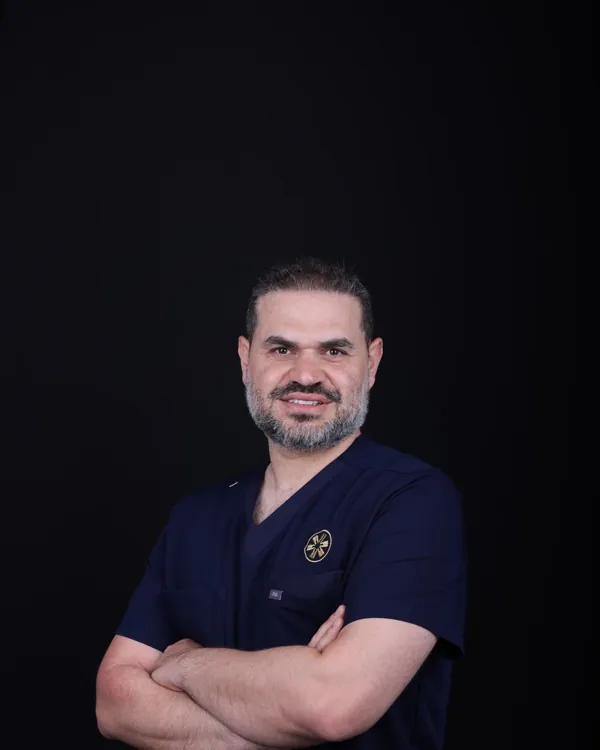
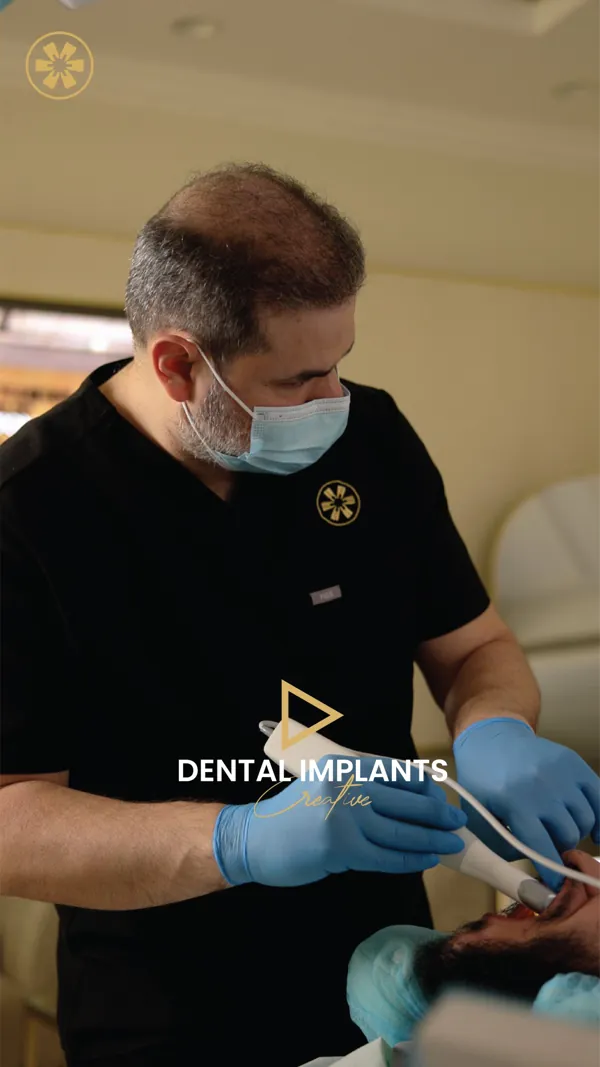
Dr. Khalid SaeedThe Celebrity Smile Maker

All-on-4 vs All-on-6: Which Full-Arch Implant Option Suits Your Jaw?

All-on-4 vs All-on-6: Which Full-Arch Implant Option Suits Your Jaw?

Full-arch comparison · 6 min read

The short answer

All-on-4 and All-on-6 are both fixed full-arch bridges; the difference is the number of implants. All-on-4 uses 4 implants, with the two back ones tilted, and often suits limited back bone. All-on-6 spreads bite force over 6 implants and often suits strong bites and adequate bone. Dr. Khalid Saeed decides with a CBCT scan at Celebrity Smile Center in Duhok, Kurdistan Region of Iraq.

Summarise this page with AI:ChatGPTClaudePerplexityGoogle AI

When someone has lost all the teeth in a jaw, or has loose teeth that cannot be saved, and wants to stop wearing a removable denture, the same question usually comes up: four implants or six? Adverts present the two as packaged products, but the number should be the result of planning, not the starting point. Studies comparing the approaches have shown good results for both when cases are selected carefully.

This article explains the difference between All-on-4 implants and All-on-6 implants in plain language: how each is placed, when one is preferred over the other, the role of a titanium bar in the final bridge, and what it means for the number of visits and long-term care. The aim is for you to walk into your consultation knowing the right questions, not to choose the number yourself before the scan.

Quick facts

All-on-4
4 implants, two tilted at the back
All-on-6
6 implants share the chewing load
In common
Fixed bridge you do not remove at home
Decided by
CBCT scan of the whole jaw
Healing
Usually 3–6 months before the final bridge
Final bridge
Often on a titanium bar, per plan
Clinic
Celebrity Smile Center, Duhok

What is the core difference between All-on-4 and All-on-6?

The core difference is how many implants carry the fixed bridge: four in All-on-4 and six in All-on-6. Both replace every tooth in the arch with a single screw-retained bridge that the patient does not take out at home.

In All-on-4, two front implants are placed upright and two back implants are tilted. The tilt makes use of the bone at the front of the jaw while avoiding the sinuses in the upper jaw or the nerve in the lower jaw, which is why All-on-4 can sometimes avoid bone grafting at the back.

All-on-6 adds two implants, so chewing forces are shared across six points instead of four. That usually gives more reserve if one implant develops a problem later, but it needs adequate bone in more positions and may require grafting or a sinus lift.

Comparison table: All-on-4 vs All-on-6

The table below summarises the practical differences as they are explained to patients in Duhok. The values are general; the real decision rests on the CBCT scan and a bite assessment.

Notice that the two options share the most important features: a fixed bridge you do not remove at home, an uncovered palate in the upper jaw unlike a denture, and the need for careful daily cleaning under the bridge plus regular reviews. The real difference comes down to three questions: how much bone is there at the back, how strong is the bite, and how much reserve do you want if an implant has a problem years from now? Those answers come from the scan and the exam, which is why two patients of similar age may be advised quite different options.

FactorAll-on-4All-on-6
Implants per arch46
Back implantsUsually tiltedUpright or tilted depending on bone
Bone requiredLess, relies on front boneMore, in more positions
Chance of graftingUsually lowerUsually higher
Load distributionAcross 4 pointsAcross 6 points
Reserve if an implant failsLess; the bridge may be affectedUsually greater
Often best forLimited bone at the backStrong bite or grinding, adequate bone
Final bridgeFixed, often on a titanium barFixed, often on a titanium bar
Comparison table: All-on-4 vs All-on-6
Comparison table: All-on-4 vs All-on-6 – Dr. Khalid Saeed

When is All-on-4 the better choice?

All-on-4 is often suitable when there is enough bone at the front of the jaw but limited bone at the back, and the patient would like to avoid extensive grafting where possible. Many people who have worn a denture for years have lost bone at the back, and tilted implants help in exactly that situation.

Its advantages are fewer implants and, in some cases, fewer additional surgical procedures. But it is not for everyone: if bone is very thin even at the front, if the bite is very strong, or if the patient grinds heavily, sharing the load across only four implants may be less safe.

  • All or most teeth in the arch missing or failing
  • Adequate front bone with limited back bone
  • Wish to avoid extensive grafting if possible
  • Stable general health and controlled diabetes

When is All-on-6 recommended?

All-on-6 is often recommended when there is enough bone in six positions, or it can be rebuilt with grafting, and when bite forces are high or the patient grinds. It is also considered for the upper jaw, where bone is usually less dense than in the lower jaw.

Its main advantage is reserve: if one implant has a problem in the long run, more implants usually remain to support the bridge. On the other hand, extra implants can mean more extensive surgery, a greater chance of grafting, higher cost and sometimes a longer treatment time.

Neither option is better in absolute terms. A multicentre randomised trial comparing full-arch upper bridges on four versus six implants with a digitally milled titanium framework reported good results for both groups over three years of follow-up.

When is All-on-6 recommended?
When is All-on-6 recommended? – Dr. Khalid Saeed

What does a titanium bar do in the final bridge?

A titanium bar is a rigid inner framework, designed digitally and milled from a single block of titanium, on which the teeth and pink gum are built. It is used with both All-on-4 and All-on-6 because a long full-arch bridge needs strength to resist flexing under chewing.

At Celebrity Smile Center in Duhok, many final full-arch bridges are made as a titanium bar implant bridge. Because it is screw-retained, the dentist can remove it in the clinic for cleaning or repair, and the upper layer can usually be repaired or renewed without replacing the framework. Alternatives such as full zirconia bridges or removable implant-supported dentures exist and are explained in the written plan.

Dr. Khalid Saeed treats the teeth on the bridge as part of smile design: length, shade and smile line are planned with the face, not just as a functional replacement.

Will I get fixed teeth on the same day?

In selected cases a fixed temporary bridge can be fitted shortly after surgery with either All-on-4 or All-on-6, provided the implants are stable enough when placed. That stability is measured during surgery, so it cannot be promised in advance.

If stability is insufficient, another temporary solution is used while the bone heals. Either way, the final bridge is made after integration, which usually takes 3 to 6 months, with a soft diet in the meantime.

Will I get fixed teeth on the same day?
Will I get fixed teeth on the same day? – Dr. Khalid Saeed

How is the decision made, and how many visits will I need?

Choosing between four and six implants depends on a CBCT scan of the whole jaw, a bite assessment, general health, smoking and diabetes. The written plan states why that number was chosen, whether grafting is needed, the temporary and final bridge, alternatives and the price.

Full-arch treatment usually needs several visits: exam and scan, surgery, reviews, then the final bridge. For international patients this is normally spread over two or more trips, as explained in our guide to dental implants for expats in Kurdistan. Start by sending photos and any previous X-rays on WhatsApp.

Dr. Khalid also works with the team at Creative Arts in Jumeirah, Dubai, which he co-founded; see Dr. Khalid Saeed's profile at Creative Arts Dubai. Duhok remains his main base for full-arch cases.
How do I look after a full-arch bridge?

Daily cleaning under the bridge and regular reviews do more than anything else to extend the life of All-on-4 and All-on-6. Clean every day with a special brush or water flosser, and attend professional cleaning, where the bridge may be removed if needed.

Smoking is one of the main causes of implant problems, and a night guard helps if you grind. If you notice bleeding, odour or looseness, come in early; in Duhok the Waterlase water laser is used as part of treating inflammation around implants when needed.

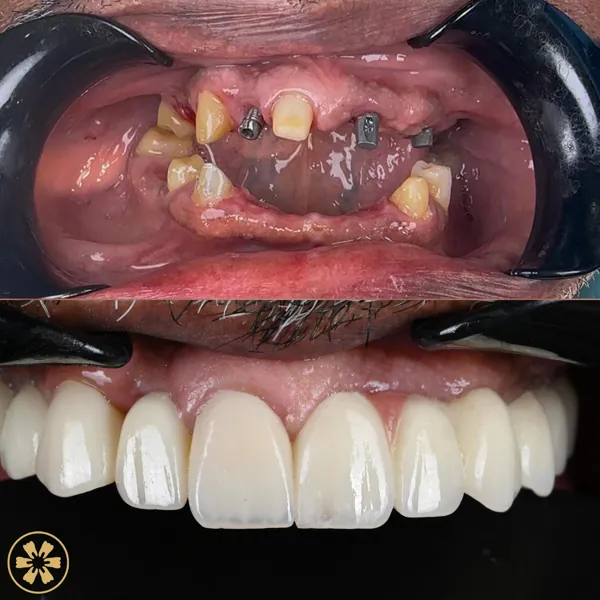
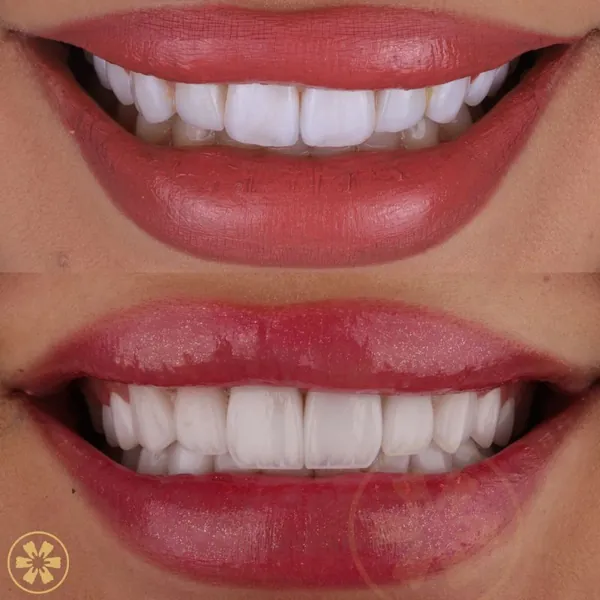
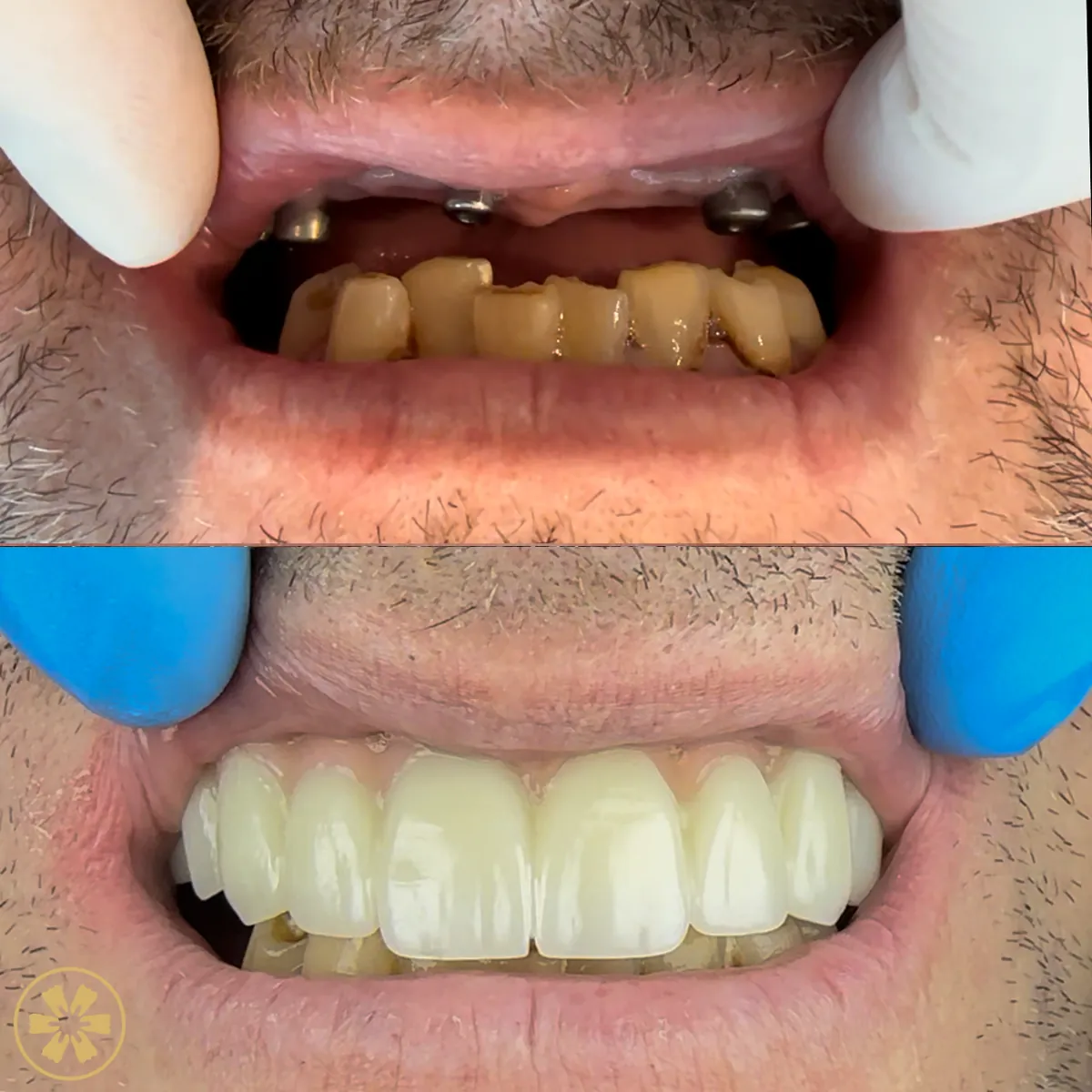
Cases from Dr. Khalid's clinic

Results vary from patient to patient. Photos are published with the patients' consent.

Creative Arts Dental & Aesthetics · Jumeirah, Dubai

Dr. Khalid Saeed at Creative Arts, Dubai

Alongside his clinic in Duhok, Dr. Khalid Saeed treats patients at Creative Arts Dental & Aesthetics in Jumeirah, which he co-founded, with Creative Art Dental Lab in the same building. The centre's official pages:

614 Jumeira St, Jumeirah 3, Umm Suqeim 1, Dubai · +971 4 342 4444 · daily 10:00–20:00 · Dr. Khalid DHA licence 06772519

Frequently asked questions

Are four implants really enough for a full arch?

In many cases yes, and long-term studies support the All-on-4 concept when the case is well selected. It depends on bone quantity and quality and on bite force. If bone is weaker or the patient grinds, six implants may be the safer choice. The decision comes from the CBCT scan and bite assessment, not from the name of the treatment.

Is All-on-6 more expensive than All-on-4?

Usually, because it includes two more implants and may need more grafting. The final cost also depends on extractions, the type and material of the temporary and final bridge, and whether one or both arches are treated. Duhok prices are not published; the price is written into your plan after the CBCT scan, and you can ask on WhatsApp after sending photos.

Is All-on-6 always stronger than All-on-4?

Not necessarily. All-on-6 spreads force across more points and usually offers more reserve, but it needs more bone and sometimes grafting. With limited back bone, All-on-4 with tilted implants can be a simpler, better-suited solution. Studies have shown good results for both in well-selected cases, so the key is matching the option to your anatomy and bite.

I have worn a denture for years and lost bone. Which option fits?

Bone loss is common after years of denture wear. All-on-4 is sometimes suitable because its tilted back implants use the remaining front bone. If bone is very limited, grafting or another option, such as a removable implant-supported denture, may be needed. A CBCT scan is what answers this question accurately.

What is a titanium bar bridge and why is it used?

It is a fixed full-arch bridge built on a rigid titanium framework that is digitally designed and milled, with teeth and pink gum on top. The bar gives a long bridge strength against flexing, and because it is screwed onto the implants the dentist can remove it in the clinic for cleaning or repair. It is used with both All-on-4 and All-on-6 depending on the plan.

Can All-on-4 be upgraded to All-on-6 later?

In some cases implants can be added later if bone allows, but this may require modifying the bridge or making a new one. That is why the right number is best decided carefully at the start on the CBCT scan, with an honest discussion of advantages, limits and reserve in the written plan before surgery.

How long does an All-on-4 or All-on-6 bridge last?

Long-term studies report good outcomes for implants in well-selected cases, but there is no guaranteed lifespan. The upper layer of the bridge may need maintenance or renewal over time. Daily cleaning, not smoking, attending reviews and treating any inflammation early are the most important factors for keeping the bridge and implants healthy.

Related articles

Related treatments

All-on-4 Full-Arch Implants

All-on-4 Full-Arch Implants

All-on-4 implants in Duhok with Dr. Khalid Saeed: a fixed full arch on 4 implants after a CBCT bone assessment, with a written plan and alternatives.

Read more
All-on-6 Full-Arch Implants

All-on-6 Full-Arch Implants

All-on-6 implants in Duhok with Dr. Khalid Saeed: a fixed full arch on 6 implants after a CBCT bone assessment, with a final bridge planned for you.

Read more
Titanium-Bar Implant Bridge

Titanium-Bar Implant Bridge

A fixed full-arch bridge on a titanium bar over implants in Duhok with Dr. Khalid Saeed: a strong framework, screw-retained for maintenance, CBCT-planned.

Read more

Send us your details

Dental treatment in Duhok for visitors from abroad: send photos first, then book your trip.

Send your smile photos on WhatsApp

Book your consultation

We reply within 24 hours by WhatsApp or phone.

Pick the country code, then type the number without the leading zero.
Or send it straight to WhatsApp

CallWhatsAppBook a consultation