All-on-4 vs All-on-6: Which Full-Arch Implant Option Suits Your Jaw?
All-on-4 vs All-on-6: bone needs, bite force, grafting, titanium bar bridges and when each full-arch implant option fits, from Dr. Khalid Saeed in Duhok.
Read the article
The Celebrity Smile Maker
The short answer
Full mouth rehabilitation is a plan that combines several treatments to repair worn, broken or missing teeth, correct the bite and improve the smile together. It suits people with problems across most of their teeth that no single treatment can fix. Dr. Khalid Saeed plans it in stages at Celebrity Smile Center in Duhok after a full assessment.
Some patients do not need only veneers or a single implant, but a rebuild of the whole mouth: teeth worn by grinding or acid, tired old fillings and crowns, missing teeth, inflamed gums and a bite that has collapsed over the years. Treating each problem separately can give an uneven result or fail quickly, because bite, teeth and gums work as one system.
Full rehabilitation starts with diagnosis: teeth, gums, jaw joints and bite are examined, with X-rays and photos of the face and smile. Dr. Khalid Saeed then writes a staged plan: decay, gum disease and root canals first, then the bite is set and tested with temporary teeth, then the final restorations with crowns, veneers and implants according to what each tooth needs. Orthodontics may be part of the plan when tooth position is the root cause.
At Celebrity Smile Center in Duhok, implants are planned on a CBCT scan, the Waterlase laser is used for gum contouring and for treating inflammation around implants, and the final look is shaped through digital smile design. Dr. Khalid also works on rehabilitation cases at Creative Arts in Dubai, which he co-founded, and sees patients in Duhok from across Iraq.
Key facts
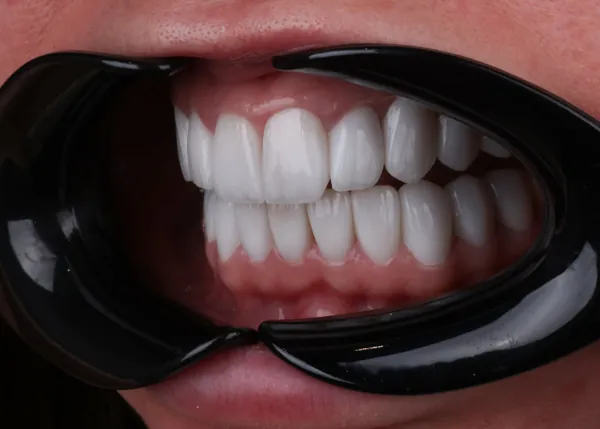
All treatments follow one sequence instead of piecemeal fixes.
Decay, gums and root canals are treated before final restorations.
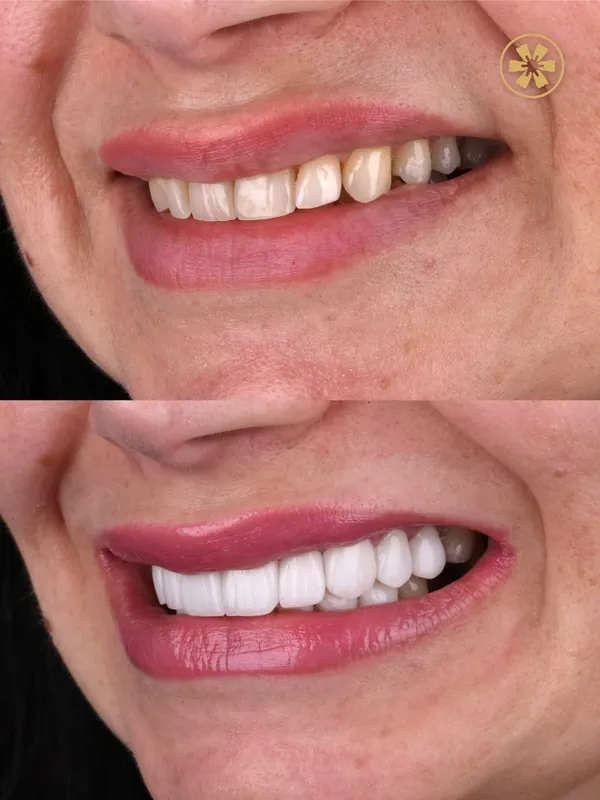
The new bite is tested in temporary teeth before final materials.

Implants are planned in 3D, with titanium bars for full arches.

For gum contouring and treating inflammation around implants.
Each stage with its price and alternatives, so you know what is ahead.
Send smile photos and any previous X-rays on WhatsApp for a first opinion before coming to Duhok.
Teeth, gums, jaw joints and bite are examined, with X-rays, CBCT where needed and facial photos.
Treatment order, alternatives, approximate duration of each stage and price.
Decay, gums and root canals are treated, hopeless teeth removed and implants placed where planned.
Digital design and temporary teeth to test the bite, look and speech.
Crowns, veneers and implant bridges once bite and gums are stable.
A night guard where needed and regular reviews.
Restorations used within a rehabilitation plan
| Restoration | When used | Preparation | Note |
|---|---|---|---|
| Veneer | Fairly healthy front teeth | Light | Keeps the most tooth |
| Crown | Weak or root-treated tooth | More | Protects against fracture |
| Bonding or onlay | Limited wear or fracture | Little | Conservative option |
| Implant | Missing tooth | Does not touch neighbours | Needs healing time |
| Full-arch implant bridge | All teeth missing in a jaw | Implant surgery | Reinforced with titanium bar |
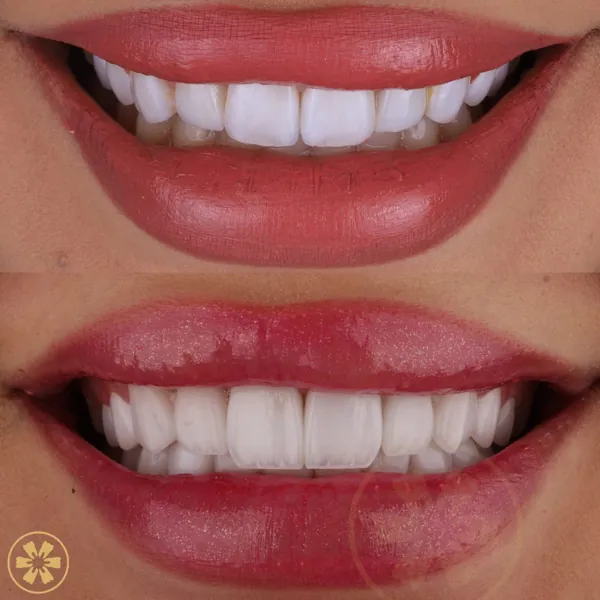
Results vary from patient to patient. Photos are published with the patients’ consent.
The cost of full mouth rehabilitation varies widely, because it depends on the number of teeth, the treatments involved (gums, root canals, crowns, veneers, implants), the lab work and the number of stages. You receive a written plan pricing each stage after diagnosis, and you can start by sending photos and X-rays on WhatsApp.
Full mouth rehabilitation goes beyond cosmetics: it brings decay, gums, bite, missing teeth and appearance into a single plan. Here the “best dentist” is the one who gives you the clearest plan and the most honest order of stages. Dr. Khalid Saeed is a cosmetic and implant dentist who graduated from Hawler Medical University, holds Dubai Health Authority licence 06772519 and co-founded Creative Arts in Dubai. Patients from every governorate and from Europe come to him for complex, multi-stage cases.
A good plan starts with the foundations: treating inflammation and decay, then assessing bite and wear, then smile design and a mock-up, and only then deciding on veneers, crowns and implants where needed. At Celebrity Smile Center in Duhok the stages are written in order with alternatives, timing and price, and can be split to suit your circumstances. For worn, short teeth, length and bite are restored together.
Crowns, veneers and bridges are made at Creative Art Dental Lab in Dubai, keeping shades and shapes consistent across stages. Before you decide, look at real rehabilitation cases and read our criteria for choosing the best dentist in Iraq. Patients from Baghdad or Basra can send photos and recent X-rays on WhatsApp for an initial outline of stages and visits before travelling; the plan and price are confirmed after the examination in Duhok.
Dr. Khalid Saeed also provides this treatment at Creative Arts Dental & Aesthetics in Jumeirah, Dubai, which he co-founded, with the work made at Creative Art Dental Lab in the same building. See Dr. Khalid in Dubai, the Creative Arts smile gallery in Dubai and Dr. Khalid Saeed's profile at Creative Arts.
Dr. Khalid's main clinic is Celebrity Smile Center in Duhok, Kurdistan Region of Iraq. Most patients from Europe, North America and the Gulf fly into Erbil International Airport and drive to Duhok. Send your photos on WhatsApp first, then read how many days you need in Duhok and the dental tourism guide.
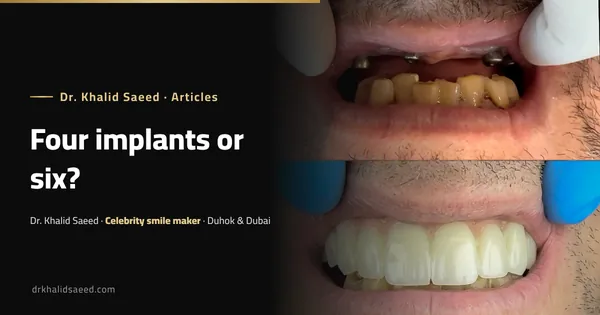
All-on-4 vs All-on-6: bone needs, bite force, grafting, titanium bar bridges and when each full-arch implant option fits, from Dr. Khalid Saeed in Duhok.
Read the article
How to choose the best dentist in Iraq for veneers and implants: verifiable criteria, a checklist, red flags and Dr. Khalid Saeed in Duhok as an example.
Read the article
12 questions to ask a veneer dentist before any drilling: mock-up, preparation, material, lab, written plan and aftercare. A checklist for Iraq and Dubai.
Read the articleIt is a treatment plan covering most of the teeth in both jaws to restore function, comfort and appearance together. It may combine gum and root canal treatment, crowns and veneers, implants for missing teeth, bite correction and sometimes orthodontics. Unlike a purely cosmetic makeover, the aim is not only looks but teeth that work properly and last.
It usually takes several months, and longer when implants need their typical 3 to 6 months of healing or when orthodontics is involved. Treatment is split into stages, and you wear temporary teeth in between so you are not left without teeth. The approximate length of each stage is written into your plan after diagnosis.
In most cases, yes. Wear from grinding or acid makes teeth short and can lower the bite. Length can be rebuilt with crowns, veneers or bonding after the new bite is tested in temporary teeth. Treating the cause matters too, such as a night guard for grinding or managing acid and reflux, so the wear does not return.
No. Dr. Khalid Saeed starts by treating decay, gum disease and inflamed nerves, because placing crowns or veneers over an untreated problem shortens their life. Once health is stable comes the temporary bite stage, then the final restorations. This order makes the result more stable in the long term.
Not necessarily. The aim is to keep every tooth that can be saved with gum treatment, root canals and crowns. Extraction is suggested only for teeth that cannot be saved. If most teeth in a jaw are beyond saving, a full-arch implant bridge such as All-on-4 or All-on-6 may be an option, explained with its alternatives in your plan.
Usually yes, because treatment goes through stages that need time for healing and lab work. Appointments can be grouped on each visit, and photos and X-rays sent beforehand on WhatsApp. If you are coming from outside Kurdistan, travel is by road, or by air to Erbil (EBL) or Sulaimani (ISU) and then by road to Duhok; check the current route before you travel.
The final look is shaped through digital smile design and tested in temporary teeth before final materials, so you can see the length and shape and ask for changes. The aim is teeth that suit your face and age and feel comfortable, not simply very white teeth. Results vary from person to person.
A Hollywood smile focuses on the visible teeth, usually with veneers. Rehabilitation covers the whole mouth, including back teeth, bite, gums and missing teeth, and may include a Hollywood smile as one part. If the teeth are healthy and the bite is good, a Hollywood smile may be enough; if there are functional problems, full rehabilitation is the better fit.
At Celebrity Smile Center on Danielle Mitterrand Road, next to Holland Bazaar in Duhok, Kurdistan Region of Iraq, which is his main practice. Patients come from Duhok, Erbil, Mosul, Baghdad, Basra, other governorates and abroad. He also works on rehabilitation cases at Creative Arts Dental & Aesthetics in Dubai, which he co-founded. Duhok phones: +964 750 799 3444 or +964 750 599 3444.
The first step is protecting the teeth from further wear, usually with a custom night guard, while looking at related causes such as stress or sleep problems. Then the amount of lost tooth length is assessed, and treatment may use composite, veneers or crowns to restore length and shape, sometimes with changes to the bite. Any restoration done without night-time protection afterwards is at risk of breaking for the same reason.
It always starts with the foundation: stopping pain and infection, treating decay and gums, and deciding which teeth can be saved and which cannot. Missing teeth are then replaced with implants or bridges, and the cosmetic stage with veneers or crowns comes last. This order is what keeps the result stable. Dr. Khalid Saeed sets this out in a written, phased plan with alternatives at each stage, so you can see what is essential and what is optional.
In many cases, yes. A written plan is usually ordered by priority: urgent treatment for pain and infection first, then what protects the teeth from getting worse, then the cosmetic stage. Each stage can be done at a different time, as long as waiting does not cause harm, such as leaving deep decay or a broken tooth untreated. Discuss your budget openly at the assessment so the order and alternatives can be built around it.
When teeth wear down or back teeth are lost, the distance between the jaws when you bite together can reduce, so the lower face looks shorter and the front teeth look small. Raising the bite means restoring some of that distance with restorations, in a planned way. It is not right for everyone, and it is usually tested first with temporary restorations for a period to confirm the jaw joints and muscles are comfortable before the final work.
A removable denture costs less and needs no surgery, but it can move when eating and speaking and does not stop bone loss. A fixed bridge on implants, such as All-on-4, All-on-6 or a titanium-bar bridge, stays in place and feels closer to natural teeth, but it needs enough bone, surgery and a higher budget. There is also a middle option: an implant-retained denture that clips in. The choice depends on your scan, health and budget.
Age alone is not a barrier. What matters is general health, how well conditions such as diabetes and blood pressure are controlled, the medicines you take, the state of the bone, and your ability to clean and attend reviews. Plans for older patients may differ, sometimes favouring simpler solutions with fewer surgical sessions. Bring your medication list and medical reports to the assessment so treatment is built around what is safe and comfortable for you.
A convincing plan explains the underlying problem clearly, treats disease before cosmetics, states what will be done to each tooth and why, and offers cheaper or less invasive alternatives. Ask to see the design or mock-up, ask how many visits are needed and what happens if you stop after a given stage. You are entitled to get a second opinion on the same written plan before starting, and a confident dentist will not mind.
In many cases yes, especially if the wear was caused by grinding or clenching in your sleep, or if treatment included many veneers and crowns. A night guard spreads the forces and protects the teeth and new restorations from chipping and wear. It is made to fit your teeth once treatment is finished, and you are shown how to wear and clean it. Whether you need one is set out in the plan based on the bite assessment.
In some cases yes, because Dr. Khalid Saeed works at Celebrity Smile Center in Duhok and at Creative Arts in Dubai, and lab work for both is made at Creative Art Dental Lab in Dubai. It depends on the stages involved and where you live, and records and design must be coordinated between the two. Prices differ between the cities, so the plan states which stage is done where and what it costs.
External links to international medical references, for further reading only; they do not replace an examination.
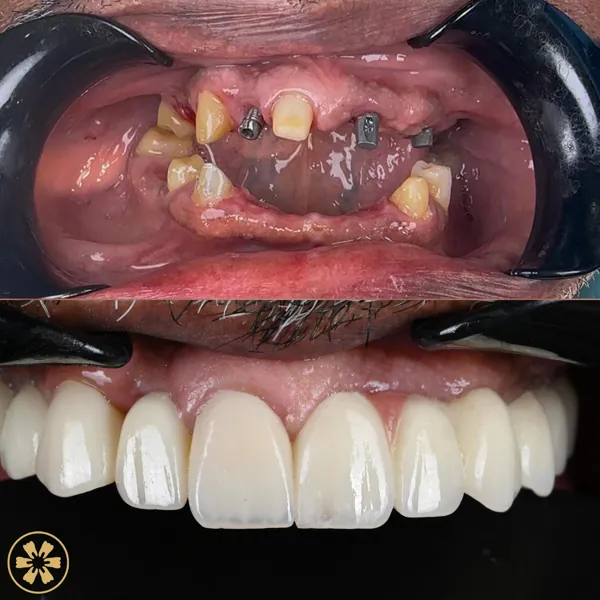
Replacing missing teeth with implants anchored in the jaw: one tooth, several, or a full arch with All-on-4 or All-on-6 on a titanium bar. CBCT-planned in Duhok with Dr. Khalid Saeed.
Read more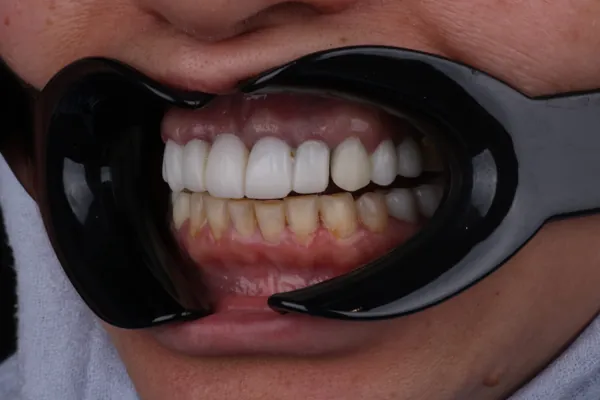
Zirconia or E.max crowns that cover weak, broken or root-treated teeth, and fixed bridges that replace a missing tooth. Dr. Khalid Saeed chooses the material for each tooth and bite in Duhok.
Read more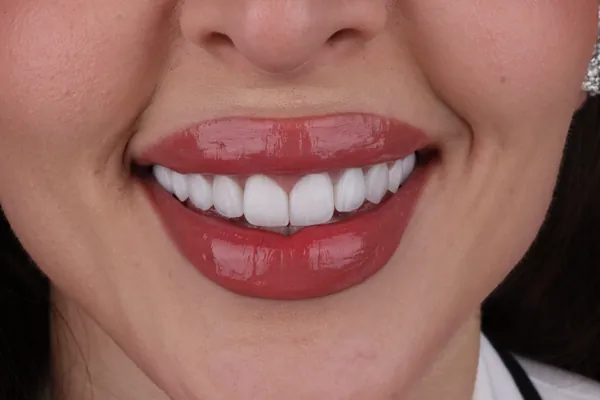
A full redesign of the visible smile with veneers or crowns, shaped to look natural on your face. Digital planning and a mock-up first with Dr. Khalid Saeed at Celebrity Smile Center, Duhok.
Read more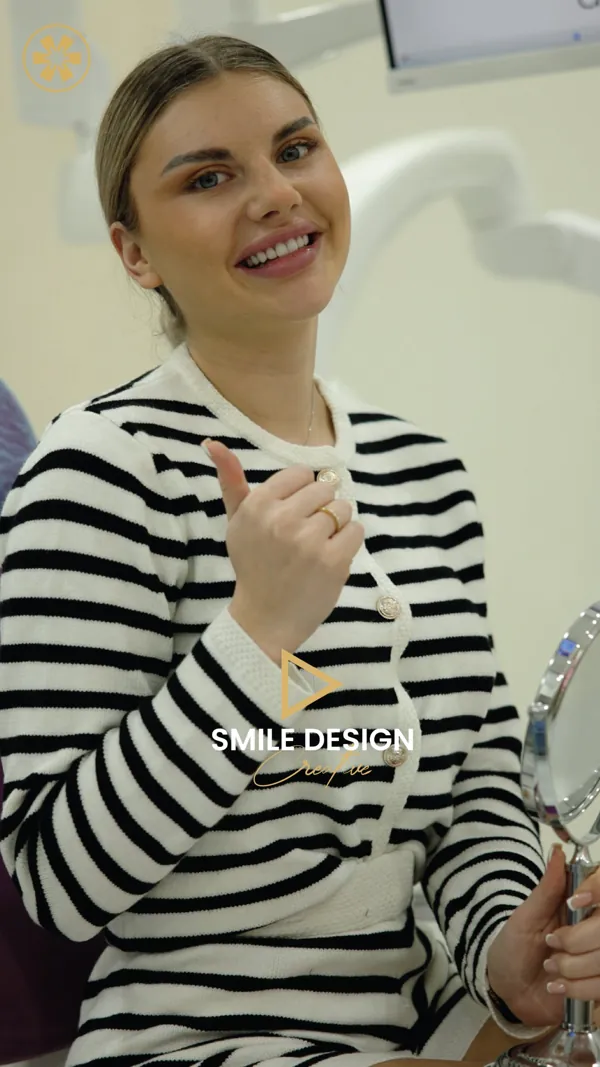
Planning your new tooth shapes on photos and video of your face, then trying them in your mouth with a mock-up before any treatment. The first step of every veneer case with Dr. Khalid Saeed in Duhok.
Read moreMedically reviewed by Dr. Khalid Saeed – last updated 2026-10-26